
Fast, Reliable Attic Insulation Across Costa Mesa
Most Costa Mesa attics built before 1970 were insulated to a standard that made sense when energy was cheap and the marine layer hung around past noon. That math has changed. If your 92626 or 92627 home still has its original attic insulation, you’re likely losing conditioned air through a thin, compressed layer that stopped doing its job years ago. We’re Creekside Insulation Co, and we’ve spent years inside Costa Mesa attics diagnosing exactly this problem. Call (844) 948-3251 and we’ll come look at your attic, tell you honestly what’s there now, and match the right material to your roof’s specific situation.
Why Creekside Insulation Co Is Costa Mesa’s Preferred Attic Insulation Company
Homeowners across Costa Mesa call us because we don’t arrive with one product and a pitch. We carry eight insulation brands, including Owens Corning, Johns Manville, and GreenFiber, so the recommendation comes from what your attic actually needs. A 1958 tract home off Baker Street with a shallow cavity and a west-facing roof needs a different approach than a 1970s two-story in Mesa Verde with standard depth. That’s the kind of distinction we make on every job.
Noel Ibarra leads our crew, and the standard he sets is simple: diagnose first, recommend second, install third. Costa Mesa homeowners appreciate that we can explain why dense-packing a tight bay works better than blowing fiberglass to an uneven depth, and why air sealing matters as much as the insulation itself. We answer our phone, show up when we say we will, and leave the attic better than we found it.
Attic Cleaning Services in Costa Mesa
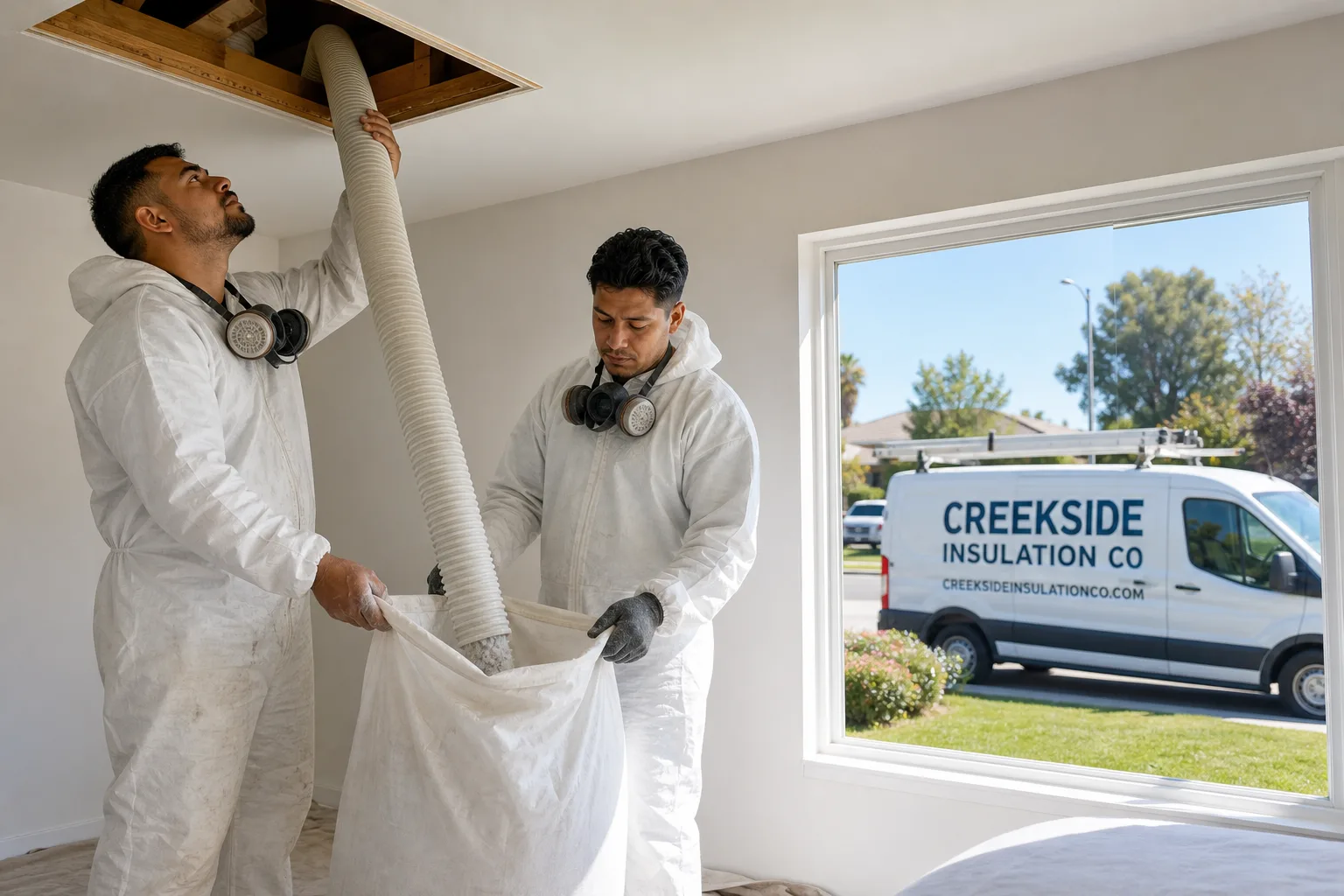
Attic Cleaning Services in Costa Mesa often mean more than hauling out old debris. In homes across 92626 and 92627, the job starts with removing the original insulation that has spent 60 years collecting dust, pest droppings, and moisture from coastal air. That old material has to come out before any upgrade makes sense. A typical attic cleaning in Costa Mesa runs $500 to $1,100 depending on attic size and how much material needs removal, and most jobs take a day.
Removal and Sanitizing
Salt air near the coast settles in attics and accelerates corrosion on exposed fasteners and supports. Our crew vacuums out the old insulation with commercial HEPA-filtered equipment, sanitizes the surfaces, and checks for any sign of pest activity or moisture intrusion before anything new goes in.
Air Sealing During Cleanout
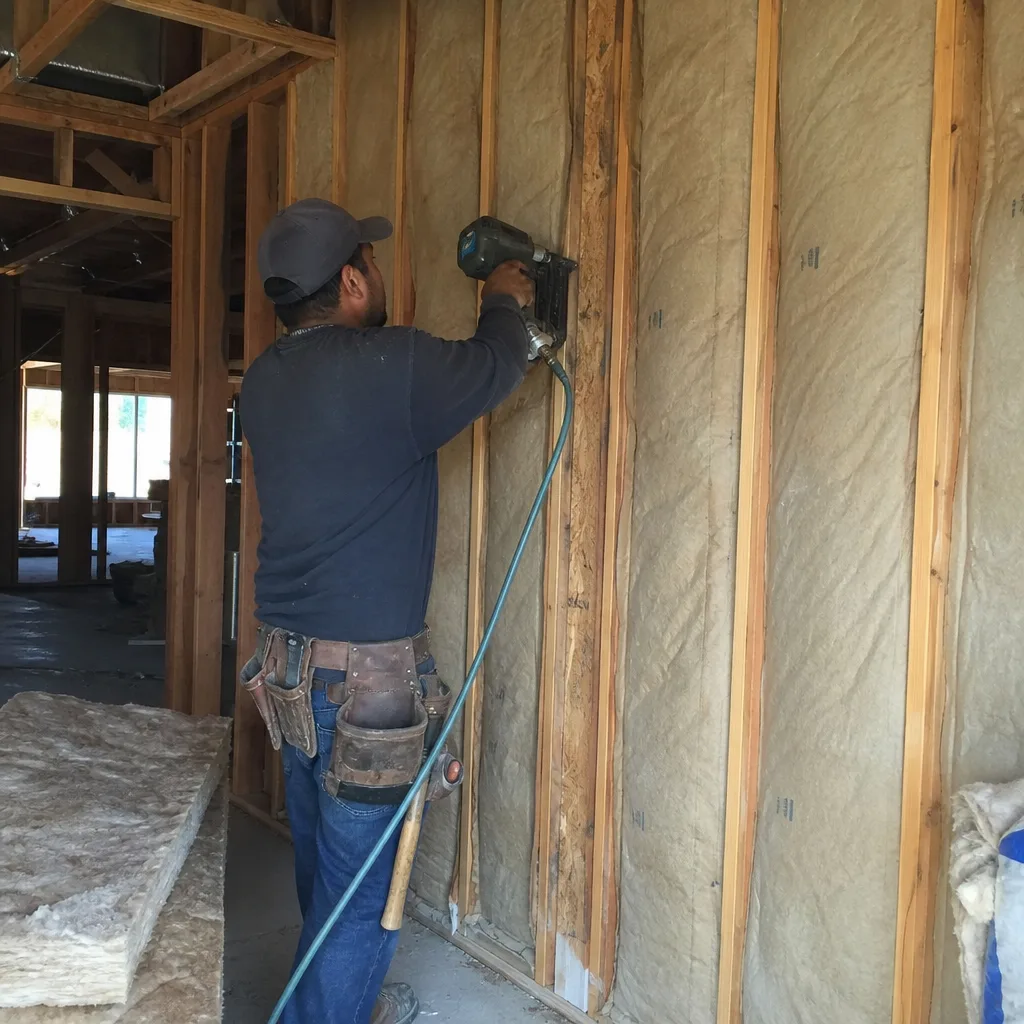
The cleanout stage is the best time to air seal. With the old insulation gone, we can see top plates, can lights, and plumbing penetrations that were hidden for decades. Sealing those gaps in Costa Mesa’s older tract homes keeps Santa Ana wind-driven heat from pressuring its way into the living space.
What happens when you call
- 1
A real person answersNo phone trees — you reach a local pro.
- 2
You get an upfront price rangeHonest numbers before anyone is dispatched.
- 3
A background-checked tech heads outLicensed & insured, dispatched right away.
- 4
You approve before work beginsNothing starts until you say go.
Attic Mold Removal in Costa Mesa
Attic Mold Removal in Costa Mesa is a recurring call because shallow, low-pitch attics trap moisture that evaporates from living spaces below and condenses against the roof deck. The marine layer doesn’t help. In homes where bathroom fans vent into the attic or where soffit airflow is blocked, mold takes hold quickly. Mold removal and surface treatment in Costa Mesa typically runs $900 to $2,400 depending on the affected square footage and whether we need to remove contaminated insulation.
Finding the Moisture Source
Removing mold without fixing the moisture issue means the mold comes back. In Costa Mesa’s 1950s-60s tract homes, we usually find disconnected bath fan ducts, missing soffit intake, or roof leaks around old penetrations. We identify and correct the source during the same visit.
Replacement Insulation After Treatment
Once the surfaces are treated and dried, we recommend materials that handle coastal humidity well. Rockwool resists moisture and doesn’t support mold growth, which makes it a strong choice for Costa Mesa attics that have already had issues. GreenFiber cellulose with proper borate treatment is another option we install for homeowners who want recycled content without sacrificing protection.
Trusted Brands We Service in Costa Mesa
Carrying eight brands means we’re never stuck recommending the only thing on the truck. For Costa Mesa attics, Owens Corning fiberglass works well where standard depth exists, Johns Manville offers reliable batt and blown-in options, and Demilec closed-cell spray foam handles airtight sealing in shallow or flat-roof cavities where nothing else fits. We also install GreenFiber cellulose for homeowners who want high recycled content. Because we stock materials locally and service Costa Mesa regularly, we can typically have product on site within a day or two of your estimate.
Common Attic Insulation Problems We See in Costa Mesa Homes
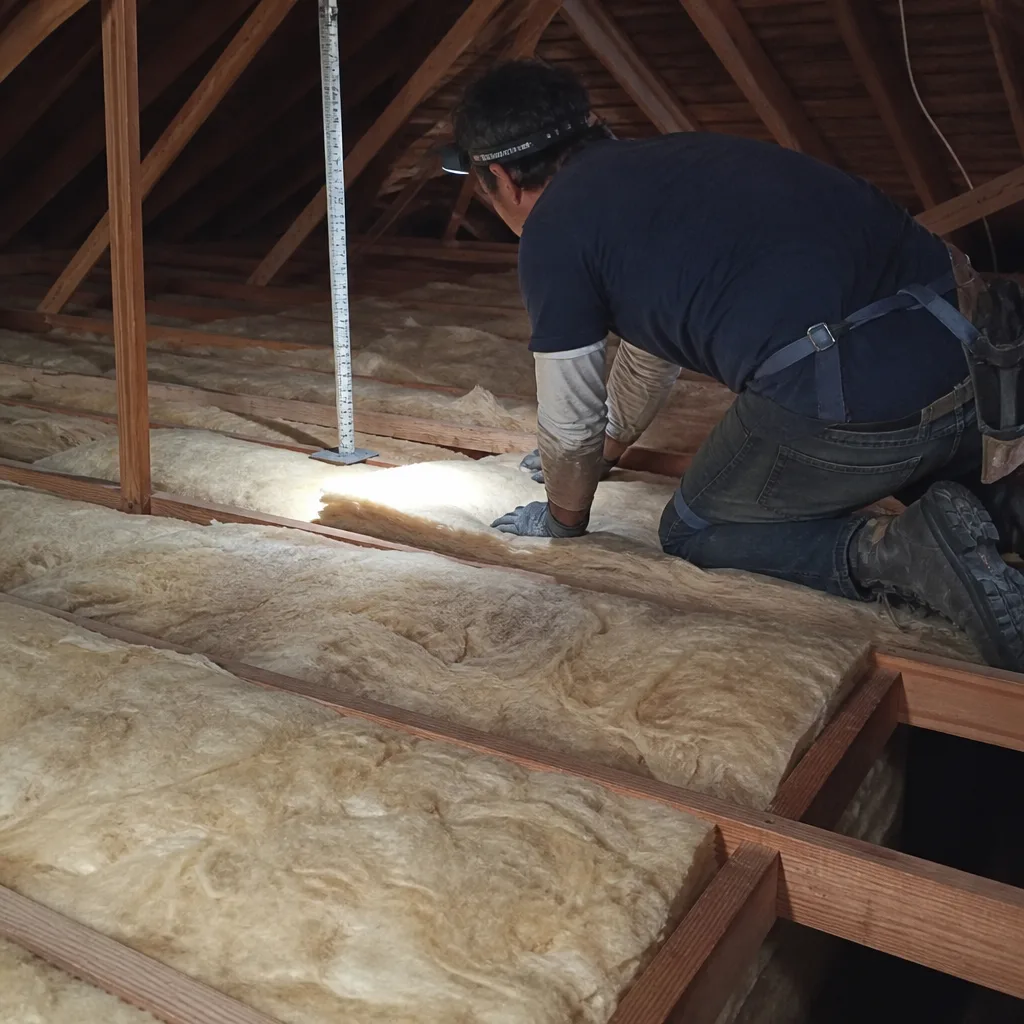
- Compressed or slumped original insulation. The fiberglass or mineral wool put in during the 1950s and 60s has been pressed down by decades of heat and humidity. What started as R-19 might be performing at R-5 or worse, especially along the eaves where afternoon sun beats on the roof.
- Shallow cavities that limit blown-in depth. Many westside ranch homes have low-pitch roofs with cavities too tight for standard blown-in coverage. Fiberglass gets left thin or uneven, which is why we often dense-pack with Rockwool or use rigid board instead of forcing a method that doesn’t fit.
- Missing air sealing around penetrations. Top plates, can lights, and plumbing vents leak attic air into the living space. During Santa Ana events, that hot dry air pushes through every gap, and no amount of insulation stops it unless the holes are sealed first.
- Corrosion from coastal salt air. Exposed staples, fasteners, and supports in Costa Mesa attics corrode faster than inland. We see salt-dulled staples giving way on older batting, which is why replacement work here often includes new fasteners and coated components where needed.
Pricing for Attic Insulation in Costa Mesa, CA
Here’s what Costa Mesa homeowners can expect. Attic insulation top-up in a standard-depth attic runs $1,200 to $2,800 depending on square footage. Full replacement, including removal of old material, air sealing, and new insulation, typically runs $2,500 to $5,500 in Costa Mesa. Dense-packing a shallow cavity with Rockwool runs $3 to $6 per square foot, while Demilec closed-cell spray foam for tight or flat-roof cavities runs $4 to $8 per board foot installed. The shallow 1950s-60s roofs on the westside often cost more per square foot than a standard attic because sealing and dense-packing take more labor than simply blowing fiberglass. Call (844) 948-3251 for an exact quote. Estimates are free, and we’ll tell you what your attic actually needs, not what’s easiest to sell.
We Also Serve Cities Near Costa Mesa
Costa Mesa sits at the center of our service area, and we regularly work in Newport Beach, Fountain Valley, Huntington Beach, and San Joaquin Hills. Each city has its own housing quirks, but the same rule applies: diagnose the attic first, then match the material. If you’re in Costa Mesa or any neighboring community, our Attic Insulation crew is ready to help.
Serving Costa Mesa, CA — Our Local Coverage Area
We’re based in the Costa Mesa area and know this community well. Use the map below to see our service coverage — if you’re nearby, we can almost certainly help.
FAQs About Attic Insulation in Costa Mesa
Flat and low-pitch roofs on Costa Mesa’s 1950s-60s homes often have attic cavities too shallow to hold the 10 to 14 inches of blown fiberglass that modern code recommends. Blowing it to whatever depth fits leaves an uneven, underperforming blanket. The fix is air sealing plus dense-packing the tight bays with Rockwool or installing rigid board, which gets more R-value into less space. Call (844) 948-3251 and we’ll measure your cavity depth and tell you what actually fits.
Current Department of Energy guidance for this climate zone calls for R-30 to R-60 in the attic, which translates to roughly 10 to 18 inches of fiberglass depending on the product. Most original 1960s Costa Mesa attics have R-11 to R-19 at best, and much of that has compressed over time. We’ll assess what’s there and recommend a realistic target based on your roof pitch and cavity space.
Yes, but only if the attic is air sealed first. During Santa Ana events, hot dry wind drives against the house and pushes attic air through every unsealed gap into the living space. Insulation slows the transfer, but sealing top plates, can lights, and penetrations stops the air movement that actually makes rooms uncomfortable. We treat both on every Costa Mesa job.
If the old insulation is compressed, pest-damaged, moldy, or saturated with dust from decades in a coastal attic, yes. Removing it lets us air seal the attic floor properly and check for moisture or structural issues that would be hidden under new material. In Costa Mesa homes built in the 1950s and 60s, that old material is usually past its useful life anyway.
We install fiberglass from Owens Corning and Johns Manville, mineral wool from Rockwool, open- and closed-cell spray foam from Icynene and Demilec, and recycled cellulose from GreenFiber. The choice depends on your attic’s cavity depth, roof pitch, moisture exposure, and whether you want recycled content. We carry all of them, so the recommendation is honest. Call (844) 948-3251 for a free attic assessment in Costa Mesa.
Written by Noel Ibarra, Owner at Creekside Insulation Co, serving Costa Mesa and surrounding Orange County communities.