
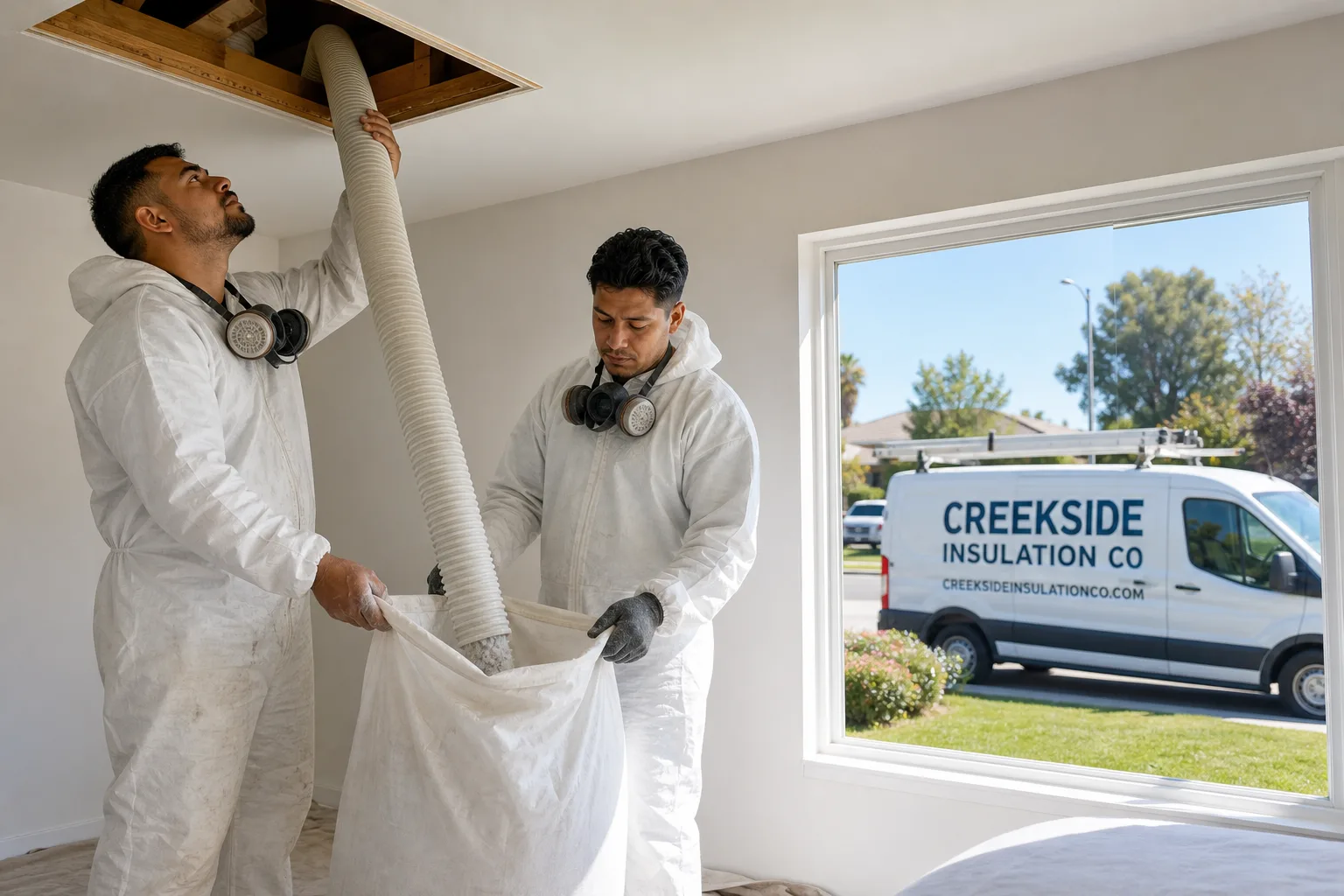
Fast, Reliable Spray Foam Insulation Across Walnut
Spray foam insulation in Walnut typically runs $2.50 – $6.80 per board foot installed, with a standard two-car garage ceiling project landing between $1,900 and $4,200 depending on foam type, depth, and whether old batts need removal first. Most Walnut jobs we schedule are completed in a single day, and we respond to calls across the 91788, 91789, and 91795 zip codes within one business day for estimates. If your attic cooks under a concrete tile roof and your cooling bill climbs every July, call (844) 948-3251 and we’ll give you an honest read on what your home actually needs.
We’ve spent enough afternoons inside Walnut attics to know exactly what this city’s housing stock throws at a crew. Low-pitch tile roofs. 1980s builder-grade batts. Summer deck temperatures that hit 140°F. That local knowledge changes how we scope every foam job, and it’s why homeowners here call us instead of a crew that treats Walnut like just another stop off the 60.
Why Creekside Insulation Co Is Walnut’s Preferred Spray Foam Insulation Company
We don’t push one foam brand because we only stock one. Creekside Insulation Co installs Spray Foam Insulation using both Icynene and Demilec systems, plus we carry Owens Corning, Johns Manville, Rockwool, and GreenFiber for projects where foam isn’t the right call. That’s eight manufacturers on the truck roster and one honest recommendation at the end of the walkthrough. Walnut homeowners appreciate that we’ll tell them when blown-in cellulose plus a radiant barrier beats closed-cell foam for their specific roof and budget.
Noel Ibarra leads our crews, and he’s built the company around a simple rule: match the material to the house, not the sales target. In Walnut’s Mediterranean stucco tract homes and hillside custom builds, that usually means closed-cell foam on garage ceilings and kneewalls, not a blanket attic foam job. We know where the top plates leak on 1980s framing. We know which neighborhoods off Grand Avenue and near Lemon Creek Park have the worst tile-deck heat gain. That’s the difference between a crew that insulates Walnut and one that just works here.
Our response time to Walnut is same-week for estimates and typically same-day completion for garage and rim joist foam work. No subcontractors. The same crew that quotes your job is the crew that sprays it.
Garage Spray Foam Insulation in Walnut
Garage Spray Foam Insulation in Walnut means sealing the ceiling, kneewalls, and sometimes the rim joist with closed-cell foam to stop the superheated air pooling under your concrete tile roof from bleeding into the garage and any rooms above it. Walnut garages on 1970s – 2000s tract homes are almost always under the worst heat load in the house. The tile roof absorbs sun all day, the thin drywall ceiling below was never built to stop that heat, and the original R-11 batts have usually sagged into near-zero performance. A Walnut garage foam job with 2 inches of Demilec closed-cell typically runs $1,900 – $4,200, and the comfort difference is noticeable the first hot afternoon.
The Problem We Find Behind Walnut Tile Roofs
Concrete tile doesn’t shed heat like asphalt shingle. Tile absorbs it, radiates it down into the attic cavity, and holds it there well after sunset. That means your garage ceiling isn’t just hot in the afternoon; it’s hot at 9 p.m. Closed-cell foam on the garage ceiling creates an air seal and a thermal break that stops that heat transfer at the source. In Walnut’s inland San Gabriel Valley microclimate, where summer highs sit near or above 100°F for weeks, this is the single highest-impact foam application we do.
Why We Pull the Old Batts First
You can’t foam over collapsed R-11 batts. When the original fiberglass sags and compresses under radiant heat, it leaves convection channels along the top plates and between joists. Closed-cell foam might cover those visually, but hot air still moves through them into the garage. We remove the old material, inspect the framing for gaps and cracks, then spray a continuous 2-inch thermal and air barrier. It’s slower work, but skipping it is why so many Walnut foam jobs underperform.
Closed Cell Spray Foam Insulation in Walnut
Closed Cell Spray Foam Insulation in Walnut is the right material for garage ceilings, kneewalls, and rim joists because it combines an air seal, a vapor barrier, and roughly R-7 per inch into one application. For Walnut homeowners dealing with 100°F+ summers and concrete tile roofs, closed-cell is what we recommend most often for garages and bonus rooms over garages. Typical Walnut pricing for closed-cell runs $3.80 – $6.80 per board foot installed, and on a garage ceiling that usually translates to $2,400 – $4,200 all-in after old batt removal and surface prep.
The Hillside Home Difference
Walnut’s east-side hillside tracts along the SR-60/57 corridor sit in a hot inland pocket that coastal LA contractors don’t account for. Homes off streets like Fallen Leaf Drive and Snow Creek Drive get full afternoon sun with no marine layer relief. Closed-cell foam on those garage ceilings and kneewalls performs measurably better than open-cell or batt upgrades because it blocks heat at the structural envelope, not just slows it. We also check the foam-to-wall transitions on hillside stucco homes, where hairline cracks let hot attic air bypass insulation entirely.
Pairing Closed-Cell With a Radiant Barrier
In Walnut’s tile-roofed homes, closed-cell foam works best when paired with a radiant barrier under the deck. The foam stops conductive and convective heat; the radiant barrier reflects the intense infrared coming off the tile. This is the hybrid approach we recommend for Walnut garages and attic kneewalls, and it’s not something you’ll get from a crew that only sells one product. For a 1988 Mediterranean stucco tract home off Fallen Leaf Drive, our crew removed builder-grade R-11 batts sagging over a garage ceiling under a tile roof that hit 140°F on a July afternoon. We applied 2 inches of closed-cell Demilec foam to the garage ceiling and kneewalls, then added a radiant barrier under the tile deck. The homeowner reported the garage staying 15°F cooler and the adjacent bonus room’s cooling load dropping noticeably.
Trusted Brands We Service in Walnut
We install spray foam from Demilec and Icynene, the two foam systems we trust for Walnut’s heat load and concrete tile roof conditions. For homes where foam isn’t the full answer, we also carry Owens Corning and Johns Manville fiberglass, Rockwool mineral wool, and GreenFiber recycled cellulose. That means when we walk a Walnut attic and tell you blown-in cellulose plus a radiant barrier is the better value than a full foam job, we’re not losing the sale. We just install what the house needs. Walnut homeowners get straight answers because we don’t have a single product to protect.
Common Spray Foam Insulation Problems We See in Walnut Homes
- Sagging original batts under tile roofs. Most Walnut tract homes built from the 1970s through the early 2000s still carry builder-grade R-11 to R-19 fiberglass. Under a tile deck that hits 140°F, that material compresses, sags, and stops doing its job. Foaming over it without removal creates a false seal that fails within years.
- Missed gaps at the top plate on low-pitch Mediterranean roofs. Walnut’s low-pitch concrete tile roofs make attic access slow and cramped. Rushed crews skip the top plate gaps where hot attic air pours into wall cavities. We inspect and seal those transitions before spraying.
- Hairline cracks at foam-to-wall transitions on hillside stucco. Hillside homes along the SR-60/57 corridor shift slightly over time, opening cracks where closed-cell foam meets stucco walls. Those cracks become hot air bypasses. Our Walnut crews check hillside transitions specifically.
- Garage ceilings that stay hot past midnight. Tile holds heat for hours. If your Walnut garage is still hot at 10 p.m., the problem isn’t just daytime sun; it’s the building envelope. Closed-cell foam plus a radiant barrier addresses that retained heat directly.
Pricing for Spray Foam Insulation in Walnut, CA
Here’s what Walnut homeowners can expect. Open-cell spray foam runs $2.50 – $4.20 per board foot installed. Closed-cell runs $3.80 – $6.80 per board foot. A typical garage ceiling in Walnut lands between $1,900 and $4,200 after old batt removal and prep. Rim joist spray foam for a standard two-story tract home usually runs $900 – $1,800. Roof deck spray foam on a low-pitch tile roof costs more than on an asphalt-shingle house because access is slower and we’re often working around trusses in tight clearances. Call (844) 948-3251 for a free estimate. We give you a fixed number after walking the attic, not a range that changes later.
We Also Serve Cities Near Walnut
Our crews work regularly in South San Jose Hills, Rowland Heights, Valinda, and La Puente, so we know the housing stock and heat patterns across the whole eastern San Gabriel Valley. If you’re in one of those cities and need the same Spray Foam Insulation in Walnut-level attention to detail, we can get to you just as quickly. Same crew, same brands, same honest material matching.
Serving Walnut, CA — Our Local Coverage Area
We’re based in the Walnut area and know this community well. Use the map below to see our service coverage — if you’re nearby, we can almost certainly help.
FAQs About Spray Foam Insulation in Walnut
Spray foam in Walnut garages doesn’t fail because of the foam itself. It fails because the original builder-grade batts under the tile roof were never removed, leaving convection channels that bypass the foam, or because the foam was applied too thinly at top plate transitions. Walnut’s inland heat and concrete tile roofs put far more thermal stress on a garage ceiling than coastal LA homes ever see. The fix is pulling the old batts, sealing the gaps, and applying a full-depth closed-cell layer. Call (844) 948-3251 and we’ll inspect what’s actually under your garage ceiling.
No, and we won’t do it. Spraying over collapsed R-11 batts in a 1980s Walnut tract home leaves the compressed material and convection channels in place. The foam looks fine from below but hot air still moves through the old batt gaps into the garage. We remove the original batts, inspect the framing, and then spray a continuous air seal. It adds labor to the job, but it’s the only way the foam actually performs in Walnut’s heat.
Yes, because access is slower. Walnut’s low-pitch concrete tile roofs reduce attic headroom, which means our crew works in tighter clearances and takes more care moving through the trusses. That’s not a corner you want cut. Expect Walnut foam work under tile to run 10 – 15% more labor than an equivalent asphalt-shingle attic in a coastal city. The tile also holds more heat, which makes a proper depth of closed-cell and a radiant barrier more important to the final result.
Yes, and it’s the most effective single upgrade for a Walnut garage. Closed-cell foam stops the radiant and conductive heat coming off your concrete tile roof before it enters the garage. We’ve had Walnut homeowners report their garages staying 15°F to 20°F cooler after a 2-inch closed-cell application paired with a radiant barrier. If someone in the house sleeps above the garage, the difference in that room is even more noticeable. Call (844) 948-3251 for a free estimate.
We use Demilec and Icynene closed-cell and open-cell spray foam systems, selected based on the specific house and the heat load. For Walnut hillside homes off the SR-60/57 corridor with full afternoon sun exposure, we lean toward closed-cell Demilec for garages and kneewalls because of its air-sealing and vapor-barrier performance. For certain interior or access-limited applications, Icynene open-cell is the better fit. You’ll get a straight recommendation after we walk the house.
If your Walnut home’s garage is an oven by 3 p.m. and still warm at midnight, the fix isn’t more fiberglass. It’s closed-cell foam at the thermal boundary, a radiant barrier under that tile deck, and old batts pulled out of the way. Call (844) 948-3251 and we’ll walk your attic with you and show you what we’d do. Free estimates. Honest material recommendations. No subcontractors.
Written by Noel Ibarra, Owner at Creekside Insulation Co, serving Walnut and the eastern San Gabriel Valley.