Fast, Reliable Attic Insulation Across Long Beach
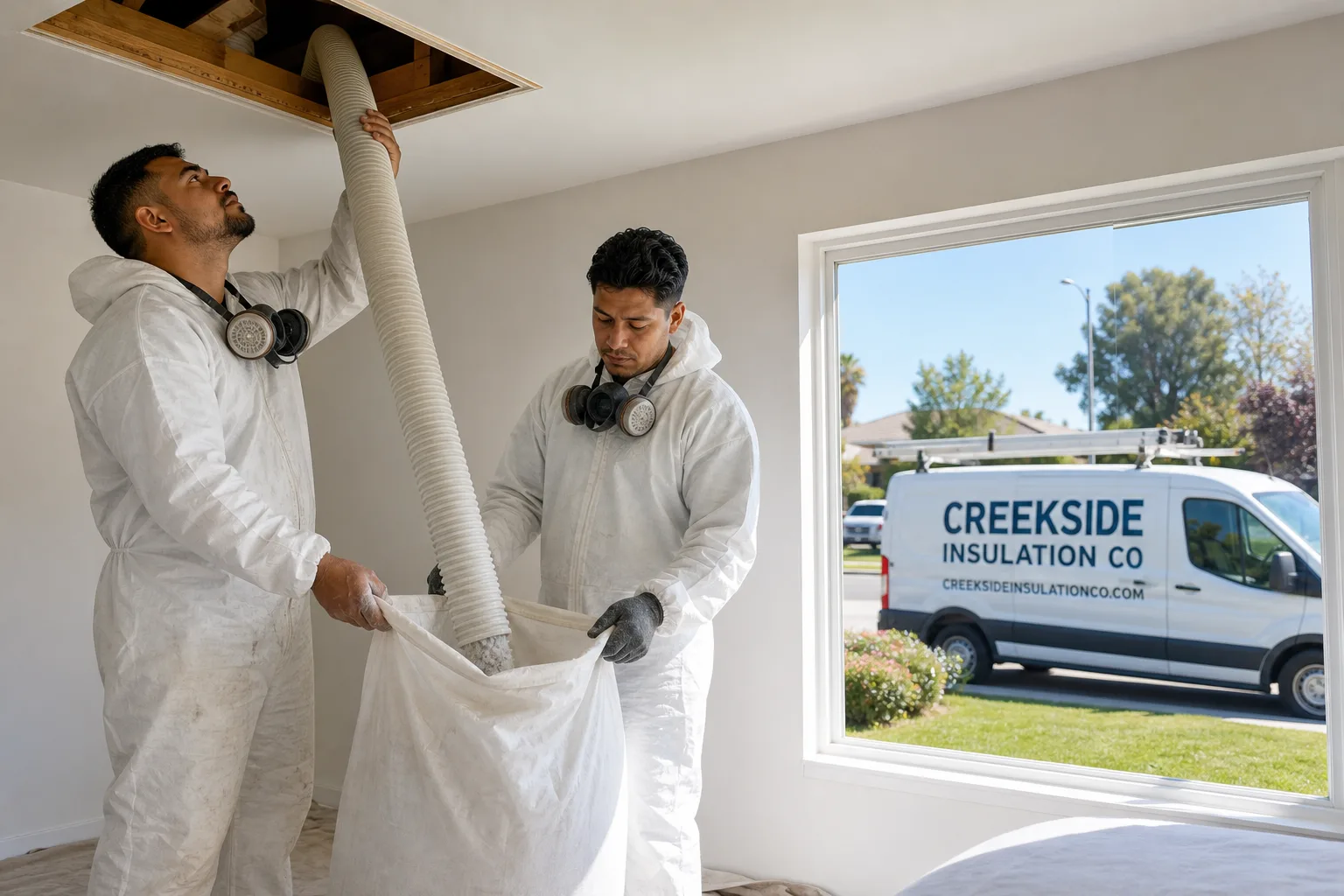
Attic insulation in Long Beach typically runs $1,450 – $3,200 for a full retrofit, with blow-in cellulose landing on the lower end and closed-cell spray foam at the top. Most jobs we schedule in Long Beach are completed in a single day, and our crews arrive with the right materials already on the truck because we know these houses before we back into the driveway. If your ceilings sweat, your upstairs rooms swing ten degrees between noon and midnight, or your energy bill climbed and never came back down, call (844) 948-3251. We’ll send someone who actually knows 1920s bungalow attics, not a trainee with a clipboard.
Why Creekside Insulation Co Is Long Beach’s Preferred Attic Insulation Company
We’ve spent years inside Long Beach attics, and the pattern is unmistakable: the marine layer punishes under-vented spaces faster than any heat wave ever could. Homeowners in Belmont Heights, Wrigley, and Rose Park call us after a previous insulation job went wrong, not because the original installer was careless, but because they treated a Long Beach attic like an inland one. Our team, led by Noel Ibarra, has built a local reputation on diagnosing the venting and vapor-control problem first, then matching the insulation to what the house actually is, not what a spreadsheet says it should be. When a customer in the 90814 ZIP calls about damp batts or a mildew smell, we don’t run through a generic checklist. We walk the attic, look at the eave vents, check which way the vapor barrier faces, and only then do we talk product. That’s why Long Beach homeowners keep our number.
Insulation Contractors in Long Beach
Insulation Contractors in Long Beach do more than blow material into a cavity. The job here means assessing a 1920s oil-boom bungalow differently from a 1960s east-side tract home, because venting, framing depth, and existing vapor control all change the correct approach. On a shallow stucco-over-wood-frame attic near El Dorado Park, the wrong batt can choke airflow and turn the ceiling into a condensation pan. We see it season after season. Typical Long Beach retrofit work starts with removing failed or damp material, correcting venting where needed, air-sealing the attic floor, then installing the right insulation for that specific roof assembly. Costs for the full insulation contractor scope in Long Beach generally land between $1,450 and $3,200 depending on attic size, access, and whether old material needs pulling first.
Moisture-First Inspections
Before we quote, we look for the things generic crews skip: reversed vapor barriers, clogged eave vents, bathroom fans dumping straight into the attic. In Long Beach’s marine climate, those details decide whether the insulation lasts ten years or eighteen months. We’d rather catch a hidden problem than install over it and get a callback after the first foggy summer.
Retrofit and Full Replacement
Some Long Beach attics just need a top-up. Others need everything out, including batts that have been soaking up harbor humidity since the Reagan administration. We’ll tell you which one you’re looking at, and we’ll show you why before we touch a single joist bay.
Attic Ventilation in Long Beach
Attic Ventilation in Long Beach is not a nice-to-have. It’s the difference between an attic that stays dry through June gloom and one that mildews by August. Most older Long Beach homes, especially 1920s – 1960s bungalows and low-rise apartments, were built before balanced intake and exhaust venting became standard. Shallow east-side stucco-over-wood-frame attics are particularly vulnerable because there’s barely room for air to move, and one wrong retrofit can trap the marine layer’s dampness against the underside of the roof deck. Ventilation correction on a Long Beach home, including opening blocked eave vents, adding intake where none exists, and ensuring exhaust balance, typically falls in the $400 – $900 range when done alongside insulation work. As a standalone project, expect $700 – $1,300 depending on roof complexity and how much old material is in the way.
Eave Vent Restoration on Legacy Homes
A 1940s bungalow off East 4th Street in 90804 taught us what these attics do when venting fails. No effective eave venting, a vapor barrier installed backwards, and old fiberglass batts that had gone damp. Mildew was blooming on the ceiling drywall below. We pulled the wet batts, corrected the vapor control, opened proper intake venting, and re-insulated. The mildew callbacks stopped the next marine-layer season. That job, and dozens like it, is why we inspect venting before we ever quote a product.
Shallow Attic Airflow Correction
On north-side and east-side tracts, attic depth runs as little as 18 inches at the eave. You can’t just stack more insulation and call it done. We design the intake and exhaust so air moves the way the roof needs it to, then size the insulation to leave that airflow intact. That’s the whole job when you get it right.
Trusted Brands We Service in Long Beach
We install products from eight manufacturers, which means we don’t have to bend your house to fit whatever brand is on the truck. For Long Beach’s damp attics, we often reach for Owens Corning fiberglass after correcting venting, because it performs predictably in high-humidity coastal air. Johns Manville batts go into shallow east-side attics where we need a consistent fit in tight framing cavities. And when a homeowner on the west side wants recycled-content insulation that holds its own against harbor moisture, we spec GreenFiber cellulose. Carrying eight brands means one honest recommendation, not a sales pitch for whatever’s cheapest to stock.
Common Attic Insulation Problems We See in Long Beach Homes
- Marine-layer condensation soaking retrofit batts. An attic with no effective eave venting traps overnight dampness, and the insulation absorbs it within one foggy season. By summer, the batts are heavy, cold, and breeding mildew on the ceiling drywall below.
- Backwards vapor barriers in 1920s – 1960s bungalows. We see this constantly. A barrier facing the wrong way drives condensation into wall cavities and ceiling drywall instead of letting moisture escape. The house looks insulated, but the framing is quietly rotting.
- Shallow stucco-over-wood-frame attics packed without airflow balance. East-side and north-side tracts were built tight, and when insulation gets crammed in without proper intake and exhaust, condensation and uneven interior temps are the default setting.
- Bathroom and kitchen exhaust fans venting into the attic. In a Long Beach marine climate, that moist air stays put. It doesn’t dissipate like it would in Temecula. We find damp spots directly under fan terminations on a regular basis.
Pricing for Attic Insulation in Long Beach, CA
A standard blown-in cellulose attic top-up in Long Beach runs $1,200 – $2,100. Full removal and replacement with fiberglass batts usually lands between $1,800 and $3,000. Spray foam work, whether open-cell Icynene for air sealing or closed-cell Demilec for moisture control, starts around $2,500 and climbs to $5,500+ depending on roof deck coverage and access. Venting correction alongside insulation typically adds $400 – $900. The variables that move your number are attic square footage, whether old material needs pulling, and how much venting work the marine layer has forced on you. Call (844) 948-3251 for a firm quote. Estimates are free, and Noel walks you through exactly where the money goes.
We Also Serve Cities Near Long Beach
Our crews cover Long Beach and the surrounding communities daily, including Signal Hill, Lakewood, Carson, and West Carson. If you’re in one of those nearby cities dealing with damp attic insulation or uneven room temps, you get the same marine-layer expertise we bring to every Long Beach job. Reach us at (844) 948-3251.
Serving Long Beach, CA — Our Local Coverage Area
We’re based in the Long Beach area and know this community well. Use the map below to see our service coverage — if you’re nearby, we can almost certainly help.
FAQs About Attic Insulation in Long Beach
Because Long Beach’s problem is condensation, not rainfall. The persistent marine layer pushes humid air into under-vented attic spaces every night, and when that moist air meets cooler surfaces, it condenses inside your insulation. If your attic lacks balanced eave and exhaust venting, the dampness never dries out. Call (844) 948-3251 and we’ll inspect your venting before we ever quote new insulation. The fix is usually venting correction first, insulation second.
Almost certainly yes. We see exactly this pattern in 1920s – 1940s bungalows across the 90804 and 90813 ZIP codes: damp insulation above the drywall, often with a backwards vapor barrier trapping moisture against the ceiling. The mildew is the symptom, not the disease. Call (844) 948-3251 and we’ll open the attic, find the moisture source, and give you a straight answer on what needs to come out and what goes back in.
Attic first, walls only if the house gutted and opened. Most 1920s – 1960s Long Beach bungalows have no wall insulation and knob-and-tube-era framing that makes wall retrofits risky. The attic is where the energy loss and moisture problems concentrate, so we fix that first. If your walls are original, the smart play is attic work plus air sealing. Call (844) 948-3251 and we’ll tell you what your specific house actually needs.
Yes, we do it regularly. Shallow east-side Long Beach attics need careful intake and exhaust design because there’s barely room for air to move, but adding eave vents and balancing exhaust is absolutely doable without tearing into the stucco. The key is sizing everything for a shallow roof cavity, not a standard truss attic. Call (844) 948-3251 for an attic ventilation inspection and a real quote.
We carry eight brands across fiberglass, mineral wool, spray foam, and recycled cellulose, which means we match material to your attic’s actual conditions. For damp marine-layer environments, we often use Owens Corning or Johns Manville fiberglass after venting correction, and GreenFiber cellulose for homeowners who want recycled content. For attics that need air sealing and moisture control, Icynene open-cell or Demilec closed-cell spray foam are on the table. We’ll show you the options and tell you which one we’d pick for our own house. Call (844) 948-3251 for a free estimate.
Written by Noel Ibarra, Owner at Creekside Insulation Co, serving Long Beach since the company’s founding.